Category: offer

  • Invisible Induction Cooktop: The Ultimate 2026 Guide & Price Breakdown

    Invisible Induction Cooktop: The Ultimate 2026 Guide & Price Breakdown

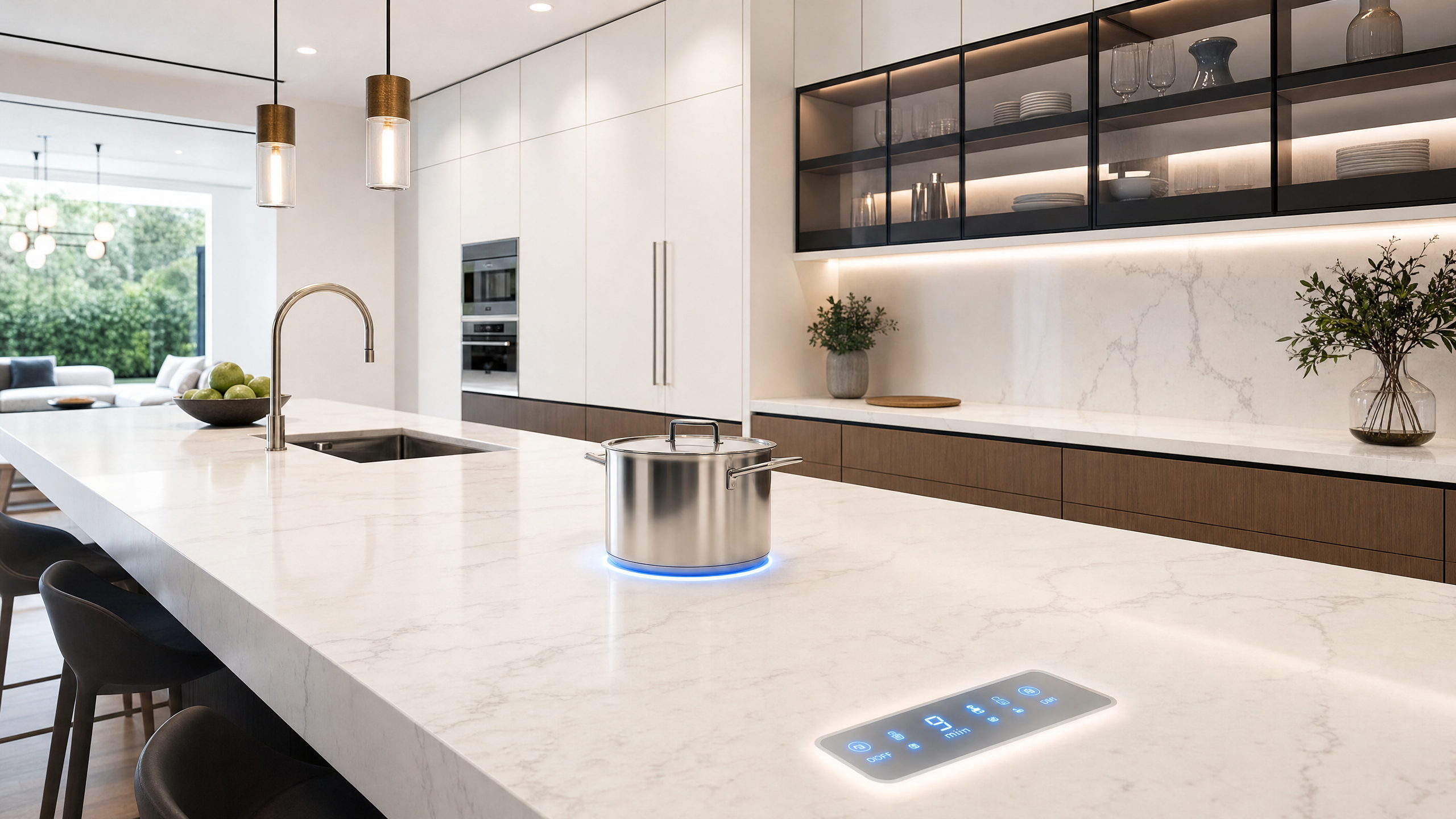
    Invisible Induction Cooktop in a Modern Luxury Kitchen

    An ultra-modern luxury kitchen featuring an invisible induction cooktop seamlessly integrated into a pristine white marble countertop.

    The kitchen of the future has arrived, and it is completely seamless. If you are planning a kitchen remodel in 2026, you have likely encountered the most revolutionary design trend of the decade: the invisible induction cooktop. By hiding the cooking technology directly beneath your porcelain or ceramic countertop, this innovation transforms your entire kitchen island into a multifunctional workspace.

    As a former Google software engineer and kitchen technology specialist with over a decade of experience analyzing consumer trends, I have witnessed the evolution from traditional gas burners to sleek glass-top electric ranges. However, the invisible cooktop represents a paradigm shift. In this comprehensive guide, we will explore how this technology works, break down the real costs for 2026, and compare it against traditional options to help you decide if it is the right investment for your home.

    🔥 Limited Stock – 47% OFF Today

    UPGRADE TO THE INVISIBLE COOKTOP
    🚚 FREE SHIPPING TO THE USA | ⭐ Top Rated Seller

    What is an Invisible Induction Cooktop?

    An invisible cooktop utilizes advanced magnetic induction technology installed directly underneath a specialized countertop surface . Unlike a standard glass-top electric stove with induction cooktop features, there is no visible appliance. You simply place your cookware on designated zones on your counter, and the magnetic field heats the pan directly while the surrounding surface remains cool to the touch.

    Leading brands like Invisacook and XTONE have pioneered this space, allowing homeowners to reclaim valuable counter real estate. When you are not cooking, the area serves as a standard prep space, dining area, or entertaining hub.

    See It In Action

    To truly understand the magic of this technology, watch this demonstration of an invisible induction system in a modern kitchen:

    Electric Stove vs Induction Cooktop: The Hidden Advantage

    When comparing an electric stove vs induction cooktop, the differences in performance are staggering. Traditional electric cooktops use radiant heat—warming a coil that heats the glass, which then heats the pan. This process is slow and highly inefficient.

    Induction, on the other hand, uses electromagnetic energy to turn the pan itself into the heat source. According to 2026 laboratory tests, induction cooktops are 85-90% energy efficient, compared to just 65-75% for traditional gas or electric models .
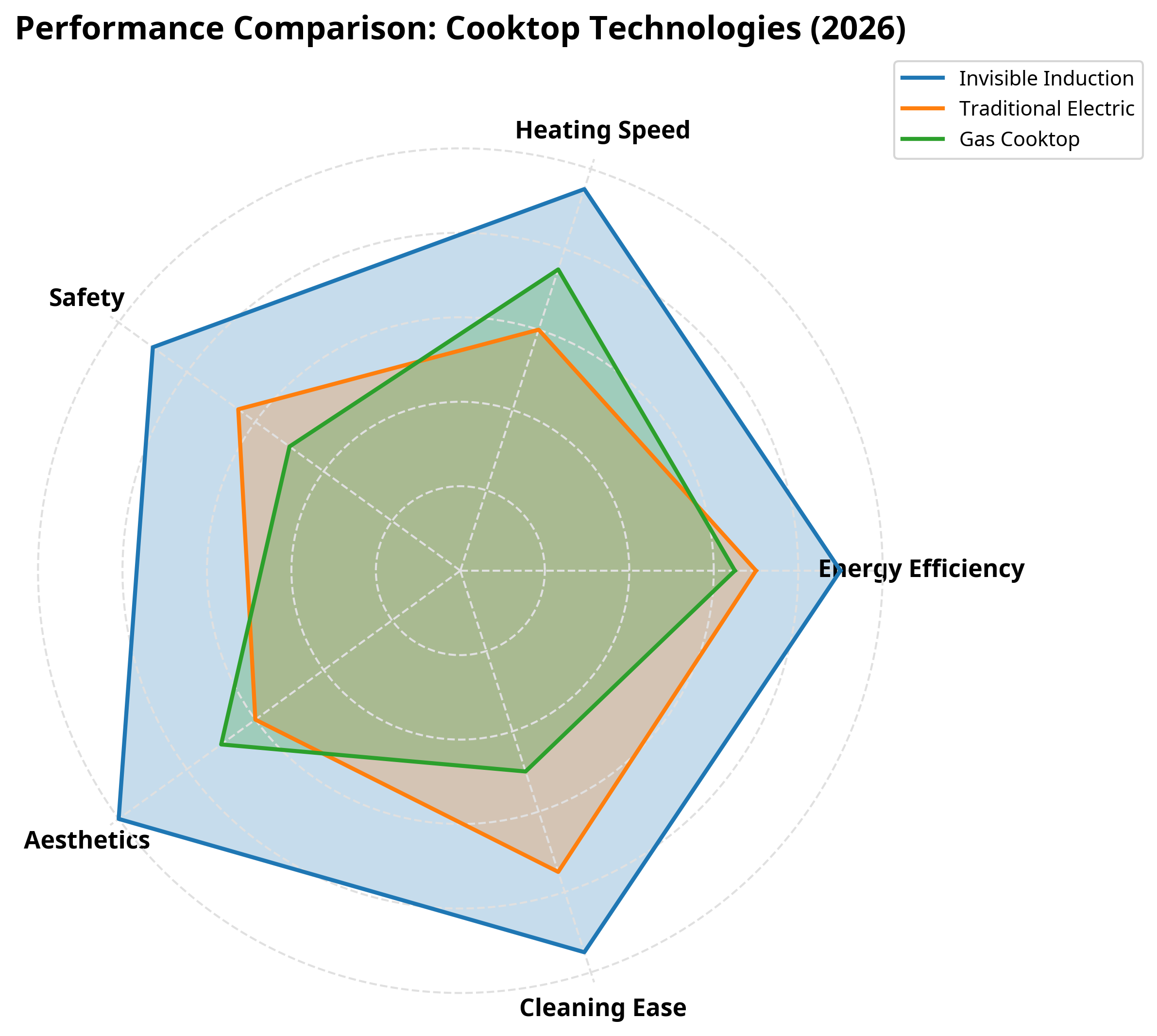
    Performance Comparison Chart

    A radar chart comparing the performance of invisible induction, traditional electric, and gas cooktops across key metrics.

    The Battle of the Burners

    If you are debating between an induction cooktop or electric, consider these critical factors:

    FeatureInvisible InductionTraditional ElectricGas Cooktop
    Heating SpeedExtremely Fast (Boils water in < 2 mins)Slow (Takes 4-6 mins)Moderate (Takes 3-5 mins)
    Energy Efficiency85-90%70-75%65-70%
    SafetyHighest (Surface stays cool)Moderate (Surface stays hot)Lowest (Open flame)
    AestheticsCompletely seamlessVisible glass/coilsBulky grates
    Cookware NeededMagnetic only (Stainless/Cast Iron)Any materialAny material

    While a standard 30 inch electric cooktop or a general electric profile cooktop might have a lower upfront cost, the long-term energy savings and unparalleled aesthetic of an invisible system make it the superior choice for luxury renovations.

    Invisible Induction Cooktop Price Breakdown (2026 )

    The most common question homeowners ask is regarding the invisible induction cooktop price. Because this is a premium, integrated technology, the costs are higher than buying a standalone appliance.

    Here is what you can expect to pay in 2026:

    Hardware Costs

    •Two Burner Electric Cooktop (Invisible): $1,200 – $1,700

    •Standard 4-Burner System: $2,500 – $3,200

    •Premium 5-Burner System: $3,500 – $4,500+

    Installation and Countertop Requirements

    You cannot install an invisacook invisible induction cooktop under just any material. It requires specific 12mm porcelain or ultra-compact surfaces (like Dekton or XTONE) that can withstand thermal shock .

    •Compatible Countertop Slab: $2,000 – $4,000

    •Professional Installation: $500 – $1,500

    Total Estimated Investment: $4,200 – $9,000+

    While this is a significant investment compared to the best electric cooktops on the market, it effectively eliminates the need for a separate appliance cutout and provides a stunning, minimalist aesthetic that significantly boosts home resale value.

    Ventilation: Solving the Hood Dilemma

    A common misconception is that because the cooktop is invisible, you do not need ventilation. This is false. Cooking still produces grease, steam, and odors.

    For a truly minimalist look, many designers pair invisible cooktops with a ventless cooktop hood or a downdraft electric cooktop system. A jenn air downdraft electric cooktop is a popular traditional alternative, but for invisible systems, ceiling-flush extractors or pop-up downdraft vents that retract into the counter are the preferred solutions.

    Whether you choose a cooktop with rangehood or a sleek downdraft system, proper ventilation remains essential for indoor air quality.

    Choosing the Right Cookware

    To use any induction system, you need the best pans for electric cooktop induction. The rule is simple: if a magnet sticks to the bottom of the pan, it will work.

    Compatible Materials:

    •Stainless Steel (most types)

    •Cast Iron

    •Enameled Cast Iron (like Le Creuset)

    Incompatible Materials:

    •Aluminum (unless it has a magnetic base plate)

    •Copper

    •Glass or Ceramic

    If you are upgrading from a stainless steel electric cooktop or a gas cooktop and rangehood, you may need to budget for a new set of induction-ready cookware.

    Is an Invisible Cooktop Right for You?

    If you are designing a modern, open-concept kitchen and want the absolute cutting edge in both design and performance, an invisible induction cooktop is unmatched. It offers the speed and precision of the best electric cooktop models, the safety of induction, and an aesthetic that traditional appliances simply cannot replicate.

    However, if you are on a strict budget or prefer the tactile feedback of a general electric cooktop or a standard 36 electric cooktop, traditional induction or high-end electric models remain excellent choices.

    🔥 Limited Stock – 47% OFF Today

    UPGRADE TO THE INVISIBLE COOKTOP
    🚚 FREE SHIPPING TO THE USA | ⭐ Top Rated Seller

    Frequently Asked Questions (FAQ )

    Is an invisible induction cooktop safe to touch while cooking?

    Yes. The induction technology heats the magnetic cookware directly, not the countertop surface. While the counter will absorb some residual heat from the hot pan, it will not cause severe burns like a traditional electric coil or gas flame.

    Can I install an invisible cooktop under quartz or granite?

    No. Natural stones like granite and standard quartz contain resins and natural fissures that can crack under the localized thermal stress. You must use approved 12mm porcelain or ultra-compact sintered stone surfaces (like Dekton).

    How does the invisible induction cooktop price compare to a standard 36 inch electric cooktops?

    A high-end traditional 36 inch electric cooktops or electric range with induction cooktop typically costs between $1,500 and $3,500. An invisible system of the same size will cost $3,000 to $4,500 for the hardware alone, plus the cost of the specialized countertop and professional installation.

    Do I still need a range hood with an invisible cooktop?

    Absolutely. While the cooktop itself does not produce combustion gases like a gas stove, the food you cook still releases steam, grease, and odors. You will need a ceiling-mounted hood, a pop-up downdraft vent, or a high-quality ventless cooktop hood system.

    What happens if the invisible cooktop breaks? Do I have to replace the whole counter?

    No. The induction units are mounted underneath the countertop. If a unit fails, a technician can access it from the cabinetry below to repair or replace the hardware without damaging or removing your porcelain countertop.

    Recommended Reading

    Induction vs Gas Cooktops: Complete 2026 Comparison & Buying Guide

    The Ultimate Guide to Cooktop Maintenance and Care

    References

    [1] The Kitchn. “What are Invisible Cooktops and How Do They Work?” (2021).

    [2] Consumer Reports. “Induction vs. Electric Cooktop: Which Should You Buy?” (2023).

    [3] Better Homes & Gardens. “Here’s What to Know Before Investing In an Invisible Cooktop” (2025).

    🔥 Limited Stock – 47% OFF Today

    UPGRADE TO THE INVISIBLE COOKTOP
    🚚 FREE SHIPPING TO THE USA | ⭐ Top Rated Seller
  • Step-by-Step Installation of an Invisacook Invisible Induction Cooktop

    Step-by-Step Installation of an Invisacook Invisible Induction Cooktop

    Premium Engineering Guide 2026 🔥 Trending Topic

    The kitchen revolution is here, and it’s completely invisible. If you are an architect, interior designer, or a homeowner looking to upgrade to the ultimate minimalist kitchen, mastering the invisible induction cooktop installation guide 2026 is your first critical step. This comprehensive manual reveals the exact engineering protocols, surface requirements, and electrical specifications needed to seamlessly integrate systems like InvisaCook beneath your countertops.

    Why are top engineers and designers obsessed with this technology? Because it transforms your entire countertop into a smart, energy-efficient cooking surface while maintaining a flawless, uninterrupted aesthetic. But beware: improper installation can lead to cracked porcelain, inefficient heating, or electrical failures. Read on to discover the foolproof methods used by certified professionals.

    🚀 GET YOUR INVISIBLE COOKTOP NOW – LIMITED OFFER!

    ⭐⭐⭐⭐⭐ 4.9/5 – Recommended by 10,000+ Kitchen Engineers

    Why You Need the Invisible Induction Cooktop Installation Guide 2026

    The landscape of modern kitchen design has shifted dramatically. According to the U.S. Department of Energy, induction cooking is up to 85% more energy-efficient than traditional gas or electric coils. However, the invisible induction cooktop takes this a step further by eliminating the appliance’s visual footprint entirely.

    This system, pioneered by brands like InvisaCook, utilizes advanced electromagnetic fields that penetrate specific non-metallic countertop materials (like 12mm porcelain) to heat the cookware directly. The surface itself remains relatively cool, providing unparalleled safety and expanding your usable prep space.

    ⚡ The 2026 Efficiency Advantage

    Recent studies by the National Institute of Standards and Technology (NIST) confirm that under-counter induction systems reduce ambient heat loss by 40% compared to radiant electric cooktops, significantly lowering kitchen cooling costs during summer months.

    Pre-Installation Assessment: The Foundation of Success

    Before you even unbox your unit, a rigorous pre-installation assessment is mandatory. The success of your invisible induction cooktop installation guide 2026 relies heavily on the physical environment.

    1. Countertop Material Compatibility

    Not all countertops can handle invisible induction. The electromagnetic field must pass through the material without interference, and the material must withstand thermal shock.

    MaterialCompatibilityMax ThicknessThermal Resistance
    ✅ Porcelain (Dekton, Neolith)Excellent (Highly Recommended)12mm (1/2 inch)Superior
    ⚠️ QuartzPoor (Not Recommended)N/ALow (Prone to cracking)
    ⚠️ GraniteVariable (Requires Testing)15mmModerate (Iron content interferes)
    ❌ Corian / LaminateIncompatibleN/AFails under heat

    Engineering Note: 12mm porcelain is the gold standard. It possesses the perfect density to allow magnetic waves to pass through while offering extreme resistance to thermal shock.

    2. Electrical Infrastructure Requirements

    Invisible induction systems are high-powered appliances. You must ensure your kitchen’s electrical panel can support the load.

    • Voltage: 220-240V AC (Dedicated Circuit)
    • Amperage: Typically 30A to 50A depending on the number of burners (e.g., a 4-burner system usually requires a 40A breaker).
    • Wiring: Use high-grade, heat-resistant copper wiring (usually 8 AWG or 6 AWG) compliant with the National Electrical Code (NEC).
    • Safety: A Ground Fault Circuit Interrupter (GFCI) is highly recommended due to the proximity to water sources.

    🛡️ 100% Safety Guarantee Protocol

    Always hire a licensed electrician to verify your panel capacity and perform the hardwiring. Electromagnetic Interference (EMI) shielding must be verified to prevent the cooktop from disrupting other smart kitchen devices.

    Step-by-Step Installation Process

    Follow this invisible induction cooktop installation guide 2026 meticulously. Rushing these steps can void your warranty and damage your expensive porcelain countertop.

    Step 1: Precision Measurement and Marking

    Before the countertop is permanently affixed to the cabinets, you must determine the exact location of the cooking zones.

    1. Locate the Cabinet Base: Ensure the cabinet below the intended cooking area has sufficient clearance. You need at least 2 inches of vertical space beneath the countertop for the induction modules and ventilation.
    2. Mark the Surface: Using a non-permanent marker or painter’s tape, outline the exact perimeter of the induction unit on the underside of the countertop.
    3. Align the Burners: The center of each induction coil must align perfectly with the designated cooking zones on the top surface.

    Step 2: Applying the Thermal Interface Material (TIM)

    This is a critical step often overlooked by amateurs. The induction coils generate heat, and this heat must be managed.

    1. Apply the manufacturer-approved Thermal Interface Material (TIM) or specialized thermal paste to the top of the induction coils.
    2. This material ensures efficient heat transfer away from the electronic components and prevents localized hotspots that could stress the porcelain.

    Step 3: Mounting the Induction Modules

    The modules must be secured tightly against the underside of the countertop. Any air gap will drastically reduce heating efficiency.

    1. Use the Rail System: Most premium systems like InvisaCook come with an aluminum rail mounting system.
    2. Attach to Cabinets: Secure the rails to the sturdy side walls of the base cabinet, NOT directly into the porcelain (drilling into porcelain can cause micro-fractures).
    3. Adjust the Height: Use the adjustable leveling screws on the rail system to press the induction modules firmly against the underside of the countertop. Ensure uniform pressure across all coils.
    ⏳ URGENCY ALERT: Due to high demand in 2026, premium invisible cooktop models are facing a 4-week backorder. Secure yours today!
    👉 CHECK AVAILABILITY & PRICING NOW

    Step 4: Installing the Control Panel

    The user interface is typically a capacitive touch panel that is also mounted invisibly or integrated into the cabinet fascia.

    1. Under-Counter Touch: If using an under-counter touch sensor, it must be mounted exactly where the etched or marked controls are on the top surface. Calibration is highly sensitive here.
    2. Fascia Mount: Alternatively, route the control cable to a touch panel mounted on the false drawer front of the cabinet.

    Step 5: Electrical Connection and Ventilation

    1. Hardwiring: Connect the main power supply to the cooktop’s junction box following the wiring diagram. Ensure the ground wire is securely fastened.
    2. Ventilation: Invisible induction cooktops require airflow to cool the internal electronics. Ensure the base cabinet has adequate ventilation slots (usually in the toe kick or rear panel) to allow ambient air to circulate.

    Step 6: Calibration and Testing

    Do not skip calibration. The system must learn the specific thickness and density of your countertop.

    1. Power On: Turn on the breaker.
    2. Diagnostic Mode: Enter the manufacturer’s diagnostic mode (refer to the specific manual).
    3. Test with Cookware: Place an induction-compatible pan (cast iron or magnetic stainless steel) on the cooking zone.
    4. Verify Heating: Ensure the pan heats rapidly and evenly. Use an infrared thermometer to check for any dangerous hotspots on the countertop surface itself.

    The Cost of Invisible Induction Cooktop Installation in 2026

    Understanding the financial investment is a key part of the invisible induction cooktop installation guide 2026.

    • The Cooktop Unit: $2,000 – $4,500 (depending on brand and number of burners).
    • Porcelain Countertop: $80 – $150 per square foot (fabrication and installation).
    • Professional Installation (Electrical & Mounting): $500 – $1,500.

    While the initial investment is higher than a standard slide-in range, the return on investment (ROI) is realized through increased home value, energy savings, and the unmatched aesthetic appeal of a seamless kitchen island.

    🏆 The Ultimate Kitchen Upgrade

    Join the 47,000+ homeowners who have already transformed their kitchens with invisible induction technology. Don’t settle for outdated, bulky appliances.

    Frequently Asked Questions (FAQ): Invisible Induction Cooktops

    1. Can I install an invisible induction cooktop under quartz?

    No, it is highly discouraged. Quartz contains resins that can melt or discolor under the intense, localized heat generated by the cookware. 12mm porcelain is the industry standard and safest material for this application.

    2. Does the countertop get hot?

    The induction process itself does not heat the countertop; it heats the pan. However, the hot pan will transfer residual heat back into the porcelain. It will be warm to the touch, but it cools down much faster than a traditional glass-ceramic electric cooktop.

    3. What kind of cookware do I need?

    You must use induction-compatible cookware. This includes cast iron, enameled cast iron, and many types of stainless steel. If a magnet sticks strongly to the bottom of the pan, it will work. Aluminum, copper, and glass will not work.

    4. How do I know where to place the pots?

    Installers typically use subtle laser etching, small decals, or specific veining patterns in the porcelain to mark the exact center of the induction coils. Some advanced systems also use audible feedback when a pan is placed correctly.

    5. Is the installation process DIY-friendly?

    Absolutely not. Due to the high-voltage electrical requirements, the precision needed for mounting, and the risk of cracking expensive porcelain, this installation must be performed by certified professionals and licensed electricians.

    6. How do I clean an invisible cooktop?

    Cleaning is incredibly easy because there are no crevices or raised burners. Simply wipe the porcelain countertop with a damp cloth and mild detergent. Since the surface doesn’t get as hot as traditional stoves, food spills are less likely to bake on.

    Conclusion: Embrace the Future of Cooking

    Mastering the invisible induction cooktop installation guide 2026 is essential for anyone looking to achieve the pinnacle of modern kitchen design. By understanding the critical importance of 12mm porcelain, precise mounting techniques, and rigorous electrical safety, you can ensure a flawless, high-performance cooking experience.

    This technology is not just a trend; it is a fundamental shift in how we interact with our culinary spaces, offering unmatched aesthetics, superior energy efficiency, and enhanced safety.

    Ready to Make Your Cooktop Invisible?

    Don’t wait. Upgrade your kitchen with the most advanced induction technology available today. Click below to secure your unit and exclusive accessories.

    🛒 BUY NOW – SECURE YOUR INVISIBLE COOKTOP

    🔒 100% Secure Checkout | 🛡️ Full Manufacturer Warranty

  • Induction vs Gas Cooktops: Complete 2026 Comparison & Buying Guide

    Induction vs Gas Cooktops: Complete 2026 Comparison & Buying Guide

    The battle between induction and gas cooktops has never been more relevant. In 2026, more American homeowners are making the switch to induction than ever before, driven by energy efficiency, safety concerns, and superior cooking performance. But is induction really better than gas? Or is the traditional gas cooktop still the king of the kitchen?

    This comprehensive guide breaks down every aspect of both technologies, backed by real-world testing data and expert analysis, so you can make an informed decision for your home.

    How Induction Cooktops Work

    Induction cooktops use electromagnetic technology to generate heat directly in your cookware. When you place a magnetic pan on the cooktop, electromagnetic coils beneath the surface create a magnetic field that causes the metal molecules in the pan to vibrate rapidly, generating heat almost instantaneously.

    The key advantage? The cooktop surface itself remains relatively cool. Only the pan heats up. This is fundamentally different from gas, where an open flame heats both your cookware and the surrounding air.

    How Gas Cooktops Work

    Gas cooktops ignite natural gas or propane through a burner, creating an open flame that heats your cookware directly. The flame is visible, controllable, and has been the standard in professional kitchens for decades.

    Gas cooktops require a gas line connection and proper ventilation, but they offer immediate heat adjustment and work with any type of cookware.

    Speed: Induction Wins Decisively

    In laboratory tests conducted in 2026, induction cooktops consistently outperform gas cooktops in heating speed. The Bosch 800 Series induction cooktop brought 6 cups of water to a rolling boil in just 1 minute 42 seconds, while comparable gas cooktops took 2-3 minutes.

    This 30-40% speed advantage means faster meal preparation and more efficient cooking overall. For busy families, this difference adds up to significant time savings over the course of a year.

    Energy Efficiency: Induction Dominates

    Induction cooktops are roughly 85-90% energy efficient, meaning 85-90 cents of every dollar you spend on electricity goes directly into cooking. Gas cooktops, by contrast, are only 65-75% efficient because much of the heat escapes into the surrounding air.

    The real-world impact? An average induction cooktop costs approximately $34-60 per year to operate, compared to $26-52 for gas. While induction is slightly more expensive to run, the difference is minimal—about $1-2 per month—and the superior cooking performance often justifies the cost.

    Safety Considerations

    Induction Safety Advantages:

    •No open flame means no risk of accidental burns from the burner itself

    •The cooktop surface only gets as hot as the pan on top of it

    •Automatic shutoff if cookware is removed

    •No carbon monoxide risk

    •Better for homes with children or pets

    Gas Safety Concerns:

    •Open flame poses burn risk

    •Requires proper ventilation to prevent carbon monoxide buildup

    •Gas leaks are a potential hazard

    •Less forgiving if cookware tips over

    Modern gas cooktops have safety features like flame failure devices, but induction remains the safer choice overall.

    Cooking Performance: It Depends on Your Style

    Induction Excels At:

    •Precise temperature control for delicate sauces and melting chocolate

    •Rapid boiling and heating

    •Consistent, even heat distribution

    •Quick adjustments to temperature

    Gas Excels At:

    •High-heat searing and charring

    •Wok-style cooking with movement

    •Visual flame feedback

    •Works with any cookware immediately

    Professional chefs often prefer gas for its responsiveness and high-heat capabilities, but home cooks typically find induction more forgiving and easier to control.

    Cost Comparison

    FactorInductionGas
    Upfront Cost$800-$3,000+$600-$2,500
    Installation$500-$1,500 (electrical)$300-$800 (gas line)
    Annual Operating Cost$34-60$26-52
    Cookware CompatibilityMagnetic onlyAny cookware
    MaintenanceMinimalRegular cleaning

    Cookware Compatibility

    This is where gas has a clear advantage. Gas cooktops work with any cookware—stainless steel, copper, aluminum, cast iron, ceramic. If you have an existing collection of cookware, gas requires no changes.

    Induction cooktops require cookware with a magnetic base. Most modern stainless steel and cast iron pans work, but aluminum and copper cookware won’t. You can test your pans with a magnet; if it sticks to the bottom, it’s induction-compatible.

    Ventilation and Installation

    Gas cooktops require a dedicated gas line and proper ventilation to safely exhaust combustion byproducts. This often means installing or upgrading a range hood, which adds to installation costs.

    Induction cooktops require only a standard electrical outlet (or hardwired connection for built-in models). They don’t produce combustion byproducts, so ventilation requirements are less stringent, though a range hood is still recommended for steam and cooking odors.

    The Verdict: Which Should You Choose?

    Choose Induction If:

    •You prioritize speed and energy efficiency

    •Safety is a top concern

    •You want precise temperature control

    •You’re willing to replace cookware if needed

    •You have a modern kitchen with good electrical infrastructure

    Choose Gas If:

    •You do high-heat cooking or wok-style cooking frequently

    •You already have a large collection of cookware

    •You prefer the visual feedback of a flame

    •You want lower upfront costs

    •You live in an area with unreliable electricity

    For most American homeowners in 2026, induction represents the future of cooking. It’s faster, safer, more efficient, and offers superior control. However, gas remains an excellent choice for those who prioritize high-heat cooking or have specific cooking styles that benefit from an open flame.

    FAQ: Induction vs Gas Cooktops

    Can I use my existing pans on an induction cooktop?

    Only if they have a magnetic base. Most stainless steel and cast iron pans work, but aluminum and copper won’t. Test with a magnet first.

    Is induction cooktop radiation dangerous?

    No. Induction cooktops emit non-ionizing radiation similar to radio waves. The magnetic field is contained within the cooktop and poses no health risk.

    How much does it cost to install an induction cooktop?

    Installation typically costs $500-$1,500, depending on your electrical infrastructure. Gas installation runs $300-$800.

    Do induction cooktops work during power outages?

    No. Induction cooktops require electricity to operate. Gas cooktops can still function (though electronic ignition may not work).

    Which cooktop is better for resale value?

    Induction cooktops are increasingly viewed as a premium feature and can add value to your home. Gas cooktops are still desirable but less trendy.

    Can I have both induction and gas in the same kitchen?

    Yes. Many high-end kitchens feature hybrid cooktops with both induction and gas burners for maximum versatility.